Article
Venture capital and private equity’s growing partnership in software and technology
Oct. 25, 2018
Software and technology appear to be creating create deal opportunities between venture capital and private equity groups. As the traditional lines continue to blur and evolve, private equity is increasingly providing unique partnership alternatives for venture capital-backed business and continues to strengthen its position as an attractive exit option for late-stage businesses.
U.S. venture capital deal flow insights and trends
Throughout the first three quarters of 2018, the U.S. private market continues to witness robust deal activity. A major trend that continues to be present amidst U.S.-based venture capital (VC) transactions has been an increased amount of capital allocated to fewer deals. As of Sept. 30, approximately $84.3 billion has been invested across 6,583 transactions. Deal value has increased 37 percent over the same period in 2017 and all three quarters now represent the three highest quarterly totals throughout the last decade. Although there has been an uptick in deal value, deal count continued its downward trajectory with Q3 registering the lowest number of deals completed in the in last five years. Some of the primary elements encouraging a concentration of capital include, an increase in non-traditional VC and tech investors committing capital at later stages, growing levels of dry powder following multiple periods of elevated fundraising activity and inflated valuations.
Annual U.S. venture capital deal flow (count and value)*
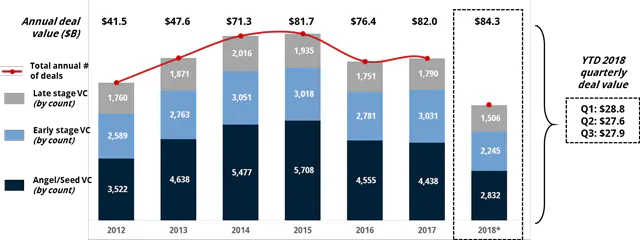
(Source: PitchBook)
*Data as of Sept. 30, 2018
Additional trends impacting the evolving VC landscape include (but are not limited to):
- Companies are electing to stay private for longer periods of time
- Although capital concentration has been more apparent amidst larger, late-stage deals, median deal sizes across seed/angel and early-stage transactions continue to grow (which has also resulted in an uptick in equity consideration being returned to investors).
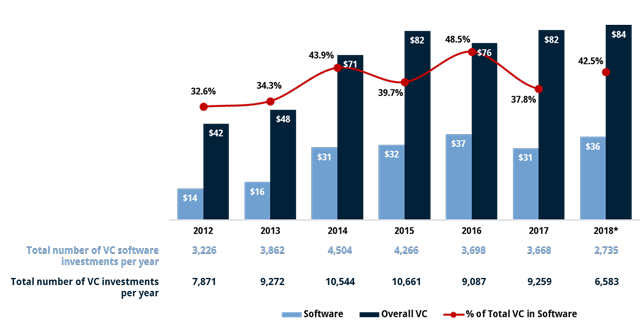
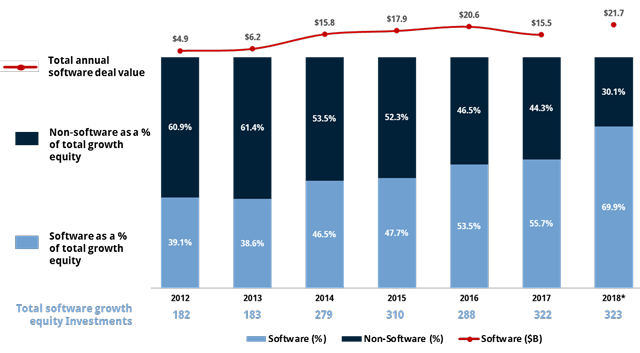
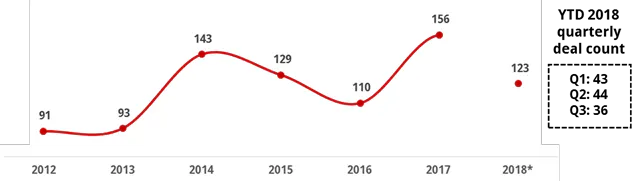
- Software continues to drive VC deal activity