
In part one of this series, we discussed the history of Governmental Accounting Standards Board (GASB) statement no. 103, financial reporting model improvements, as well as enhanced guidance related to the management’s discussion and analysis (MD&A) section of the financial statements. This installment will focus on the changes to the statement of revenues, expenses and changes in fund net position for proprietary funds.
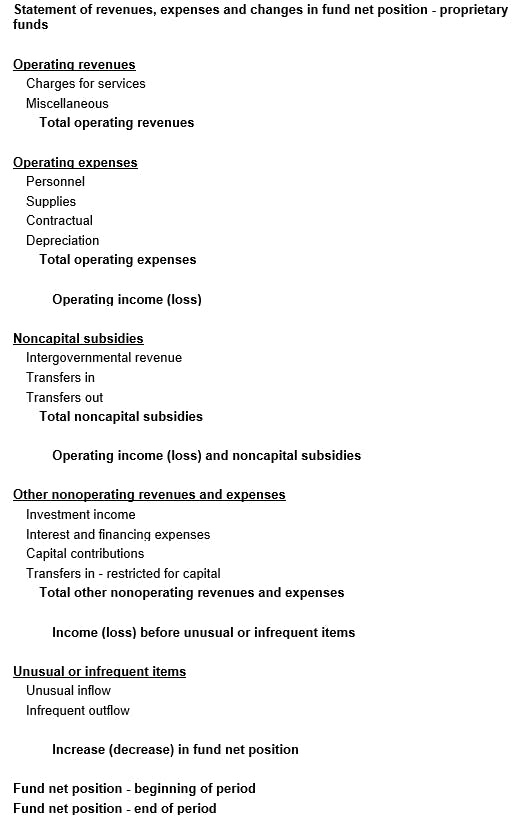
The statement of revenues, expenses and changes in fund net position for proprietary funds is intended to show the inflows and outflows for the period. Given the emphasis of proprietary fund activity is on the operations, it is appropriate that GASB wants this statement to define revenues and expenses of operating activities and non-operating activities. In addition, the guidance in GASB 103 paragraphs 11-14 provides a new category of activity called subsidies, and a new structure for the statement of revenues, expenses and changes in fund net position.
Let’s start with the new definitions:
- Non-operating revenues and expenses* include:
- Subsidies (defined below)
- Contributions to permanent or term endowments
- Revenues and expenses related to financing
- Resources from the disposal of capital assets and inventory
- Investment income or expenses
Operating revenues and expenses: All items that don’t meet the definition of non-operating above, as long as they are not unusual or infrequent items.
* If the principal ongoing operations of a proprietary fund include transactions that would normally be nonoperating as defined by GASB 103, those transactions should be reported as operating in that situation.
Subsidies include:
- Resources received from another party or fund which are non-exchange (the proprietary fund does not provide goods or services) and that directly or indirectly keep the current or future fees/charges of the proprietary fund lower than they otherwise would be
- Resources provided to another party or fund which are non-exchange (the other party or fund does not provide goods or services) and are recoverable through the current or future rates/charges of the proprietary fund
- All other transfers
Here is an illustration of the new statement and the presentation order.
Finally, GASB 103 clarifies that for entities that prepare an annual comprehensive financial report (ACFR) the statistical section should report the major source revenues distinguishing between operating, non-capital subsidy and non-operating revenues consistent with the guidance above. If key revenue sources change with the implementation of GASB 103, management will want to consider guidance in GASB 100 for prior years presented within the statistical section.
Prepare for implementation
Proactive work now will ensure a smooth transition as well as all required data for retroactive implementation within comparative financial statements when GASB 103 is effective for periods ending June 30, 2026 and after.
- Review the definition of operating revenues and expenses for your organization and determine if there will be changes when moving to the definitions and guidance in GASB 103
- Evaluate your statement of revenues, expenses and changes in fund net position to identify what changes need to be made – formatting, reorganization and in mapping balances to appropriate lines
- Talk to those within your organization that prepare annual financial statements as well as other reports that follow GASB structure or reconcile to the GASB statement categories to verify that all impacted systems and documents are considered in the implementation plan
What’s next
The final article in this series will focus on the remaining changes associated with terminology, reporting major component units and budgetary comparison reporting.
For more information on GASB 103, or to learn how Baker Tilly's public sector specialists can help, contact our team.
