
Article
Seven use cases for analytic process automation in the finance department
March 26, 2024 · Authored by Alyssa Galvan and Loren Den Herder
Analytic process automation is revolutionizing the finance department by automating complex processes and generating valuable insights from vast amounts of data. The use of analytic process automation in finance, along with intelligent automation processes, can bring about significant improvements in efficiency, accuracy, and decision-making, leading to enhanced performance and competitive advantage.
What is analytic process automation?
Analytic process automation refers to tools such as Alteryx and Tableau Prep. It automates the process of compiling and preparing data from multiple source systems and sharing the data via a data analytics platform throughout an organization.
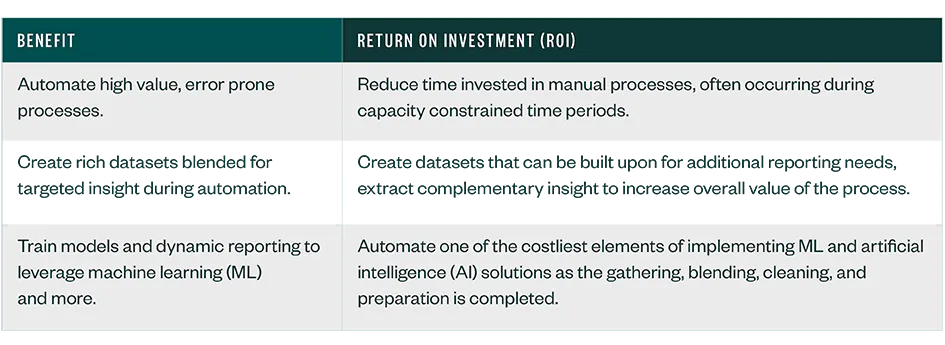
Ways to implement analytic process automation
Below are seven use cases for analytic process automation in finance and how they can benefit an organization:
1. Fraud detection and prevention
Analytic process automation can analyze transaction data in real-time to identify unusual patterns or anomalies that might indicate fraudulent activity. This proactive approach allows for immediate action, preventing potential losses and enhancing the security of financial operations.
2. Risk assessment and management
Analytic process automation can help in assessing various types of risks such as credit risk, market risk, and operational risk. By analyzing vast amounts of data, it can identify potential risks and provide insights to mitigate them, thereby enhancing the organization's risk management capabilities.
3. Regulatory compliance
Compliance with financial regulations is crucial. Analytic process automation can automate the process of gathering, analyzing, and reporting data related to regulatory compliance. This not only reduces the risk of noncompliance and potential penalties but also frees up valuable time for staff to focus on other strategic tasks.
